
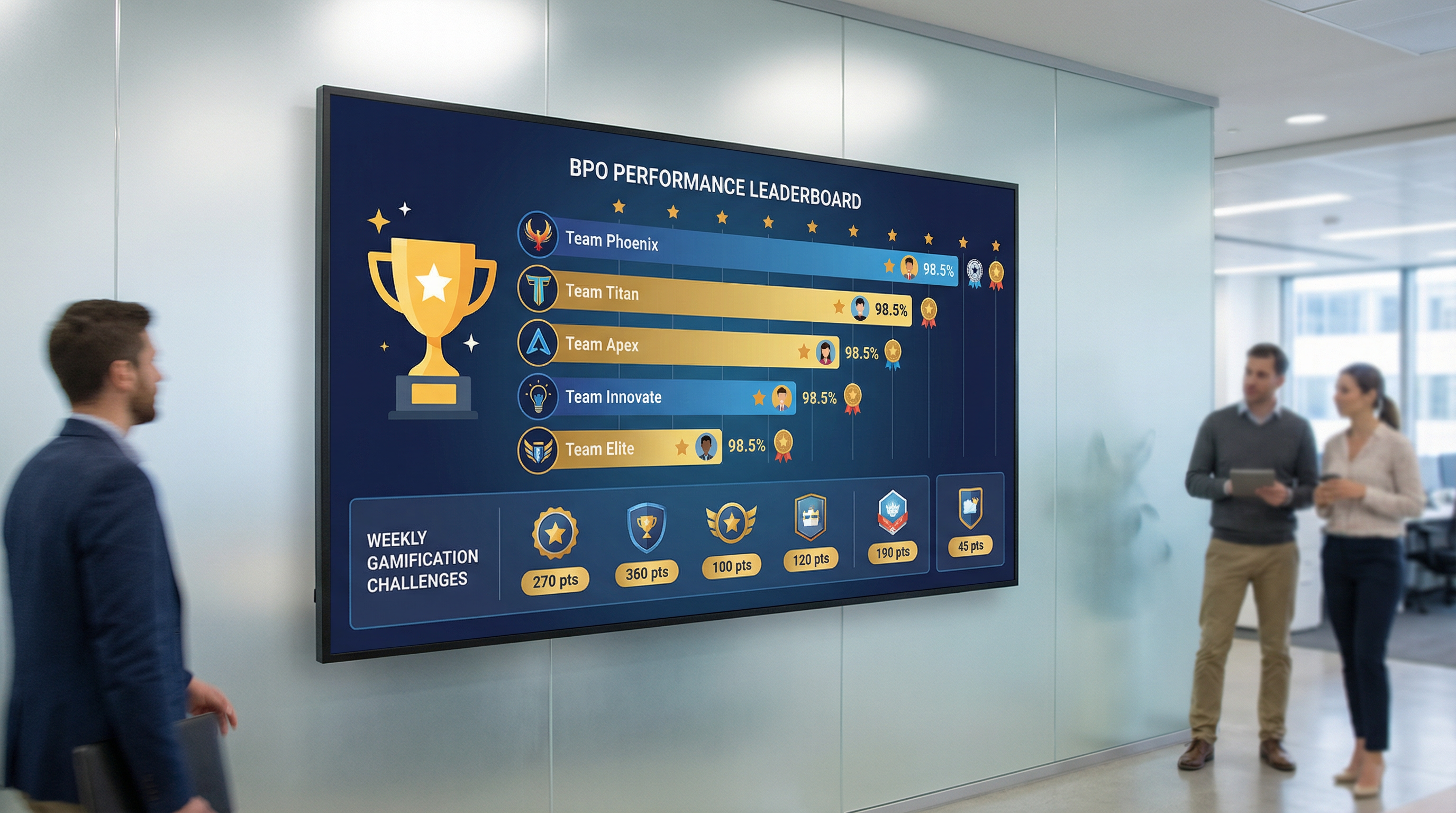
Competition drives improvement. When teams can see how they stack up against each other, it creates motivation that no amount of management pressure can replicate. HeroFocus team performance leaderboards transform attendance and productivity data into engaging competitions that improve results across the board.
The Power of Visible Comparison
Humans are naturally competitive. When performance is visible and comparable, several psychological factors come into play:
- Social proof: Teams see what's possible when others achieve high scores
- Pride: No team wants to be at the bottom of the leaderboard
- Recognition: Top performers get visible acknowledgment
- Accountability: Poor performance is harder to ignore when it's public
Key Metrics for Team Comparison
HeroFocus enables comparison across multiple dimensions:
Attendance Metrics
- On-time arrival rate
- Tardiness frequency and average minutes late
- Unplanned absence rate
- Schedule adherence percentage
Activity Metrics
- Average activity score
- Productive time percentage
- Application usage distribution
- Idle time percentage
Performance Metrics
- Tickets/calls handled per hour
- Customer satisfaction scores
- First contact resolution rate
- Average handle time
Designing Effective Leaderboards
1. Choose Meaningful Metrics Not everything should be a competition. Focus on metrics that:
- Directly impact business outcomes
- Are within team control
- Can be improved through effort
- Don't encourage harmful behaviors
2. Ensure Fair Comparison Compare like with like:
- Similar team sizes
- Comparable work types
- Equivalent shift patterns
- Same client requirements
3. Update Frequently Stale data loses impact:
- Real-time or daily updates for engagement
- Weekly summaries for trends
- Monthly reports for formal recognition
4. Celebrate Improvement, Not Just Position Recognize teams that show the most improvement, not just those at the top:
- "Most Improved" awards
- Progress tracking over time
- Personal best achievements
Implementing Team Competitions
The Tardiness Challenge Create a monthly competition for lowest tardiness rate:
- Track on-time arrivals as a percentage
- Display team rankings prominently
- Reward the winning team with recognition or small prizes
- Highlight improvement stories
The Activity Olympics Compete on productive activity levels:
- Average activity scores across the team
- Bonus points for consistency (low variance)
- Penalties for excessive idle time
- Weekly winners announced in team meetings
The Attendance Streak Track consecutive days of perfect attendance:
- Team streaks displayed on dashboards
- Milestone celebrations (30 days, 60 days, 90 days)
- "Streak breaker" analysis to identify patterns
Avoiding Gamification Pitfalls
Don't Create Toxic Competition
- Avoid public shaming of low performers
- Focus on team achievements, not individual failures
- Ensure metrics can't be gamed in harmful ways
Don't Overdo It
- Too many competitions dilute focus
- Constant competition creates fatigue
- Balance competition with collaboration
Don't Ignore Context
- Some teams face harder challenges
- External factors affect performance
- Fairness matters more than precision
Case Study: Transforming Attendance Culture
A BPO company with 500 agents across 10 teams implemented HeroFocus leaderboards:
Before Implementation:
- Average on-time rate: 78%
- Significant variation between teams (65% to 88%)
- No visibility into team comparisons
- Attendance seen as individual responsibility
After 3 Months:
- Average on-time rate: 91%
- Reduced variation (85% to 96%)
- Weekly leaderboard updates in team meetings
- Attendance became a team pride issue
Key Success Factors:
- Visible dashboards in common areas
- Monthly recognition for top teams
- Manager coaching for struggling teams
- Focus on improvement, not punishment
Integrating with Rewards and Recognition
Leaderboards work best when connected to meaningful recognition:
- Public acknowledgment: Announce winners in company communications
- Small rewards: Gift cards, extra break time, team lunches
- Career benefits: Consider attendance in promotion decisions
- Peer recognition: Allow teams to celebrate each other
Conclusion
Team performance leaderboards transform abstract metrics into engaging competitions that drive real improvement. By making attendance and activity visible, comparable, and consequential, HeroFocus helps BPO companies build cultures of excellence where teams take pride in their performance. The key is designing competitions that are fair, meaningful, and focused on improvement rather than punishment.