
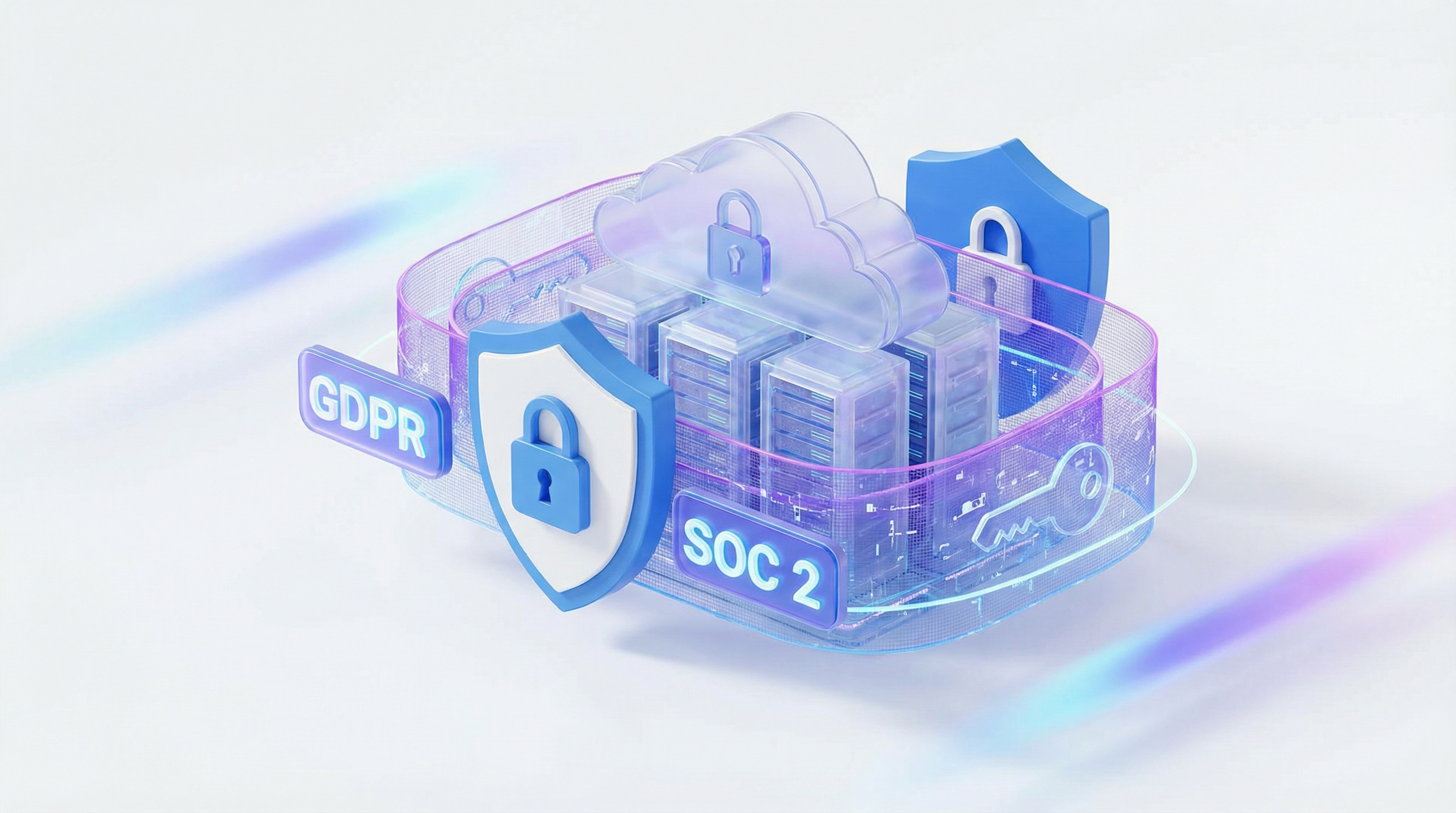
As workforce monitoring becomes more prevalent, regulatory compliance has become a critical consideration. Companies operating globally must navigate a complex web of privacy regulations, with GDPR and SOC 2 being among the most significant.
Understanding GDPR Requirements
The General Data Protection Regulation (GDPR) applies to any organization processing personal data of EU residents, regardless of where the company is located. For workforce monitoring, this means:
Lawful Basis for Processing Companies must establish a lawful basis for monitoring employees. This typically falls under "legitimate interests" but requires a careful balancing test between business needs and employee privacy rights.
Data Minimization Only collect data that is necessary for the stated purpose. Comprehensive surveillance that captures everything "just in case" violates this principle.
Purpose Limitation Data collected for attendance verification cannot be repurposed for performance management without additional consent or justification.
Transparency Employees must be informed about what data is collected, how it's used, who has access, and how long it's retained.
Data Subject Rights Employees have the right to access their monitoring data, request corrections, and in some cases, request deletion.
SOC 2 Compliance
SOC 2 (Service Organization Control 2) is particularly relevant for BPO companies handling client data. The framework covers five trust service criteria:
- Security: Protecting systems against unauthorized access
- Availability: Ensuring systems are available for operation
- Processing Integrity: Ensuring system processing is complete and accurate
- Confidentiality: Protecting confidential information
- Privacy: Protecting personal information
Implementing Compliant Monitoring
Technical Measures
- Encryption of monitoring data in transit and at rest
- Access controls limiting who can view monitoring data
- Audit logs tracking all access to sensitive information
- Automatic data deletion after retention periods expire
Organizational Measures
- Clear policies documenting monitoring practices
- Training for managers on appropriate use of monitoring data
- Regular audits of monitoring practices
- Incident response procedures for data breaches
Documentation Requirements
- Privacy impact assessments
- Data processing agreements with vendors
- Records of processing activities
- Evidence of employee notification
Regional Variations
Beyond GDPR and SOC 2, companies must consider local regulations in each operating location. Some jurisdictions require explicit employee consent for monitoring, while others prohibit certain types of surveillance entirely.
Conclusion
Compliance is not optional—it's a fundamental requirement for any workforce monitoring program. By building privacy and security into monitoring systems from the ground up, companies can achieve their business objectives while respecting employee rights and meeting regulatory requirements.