
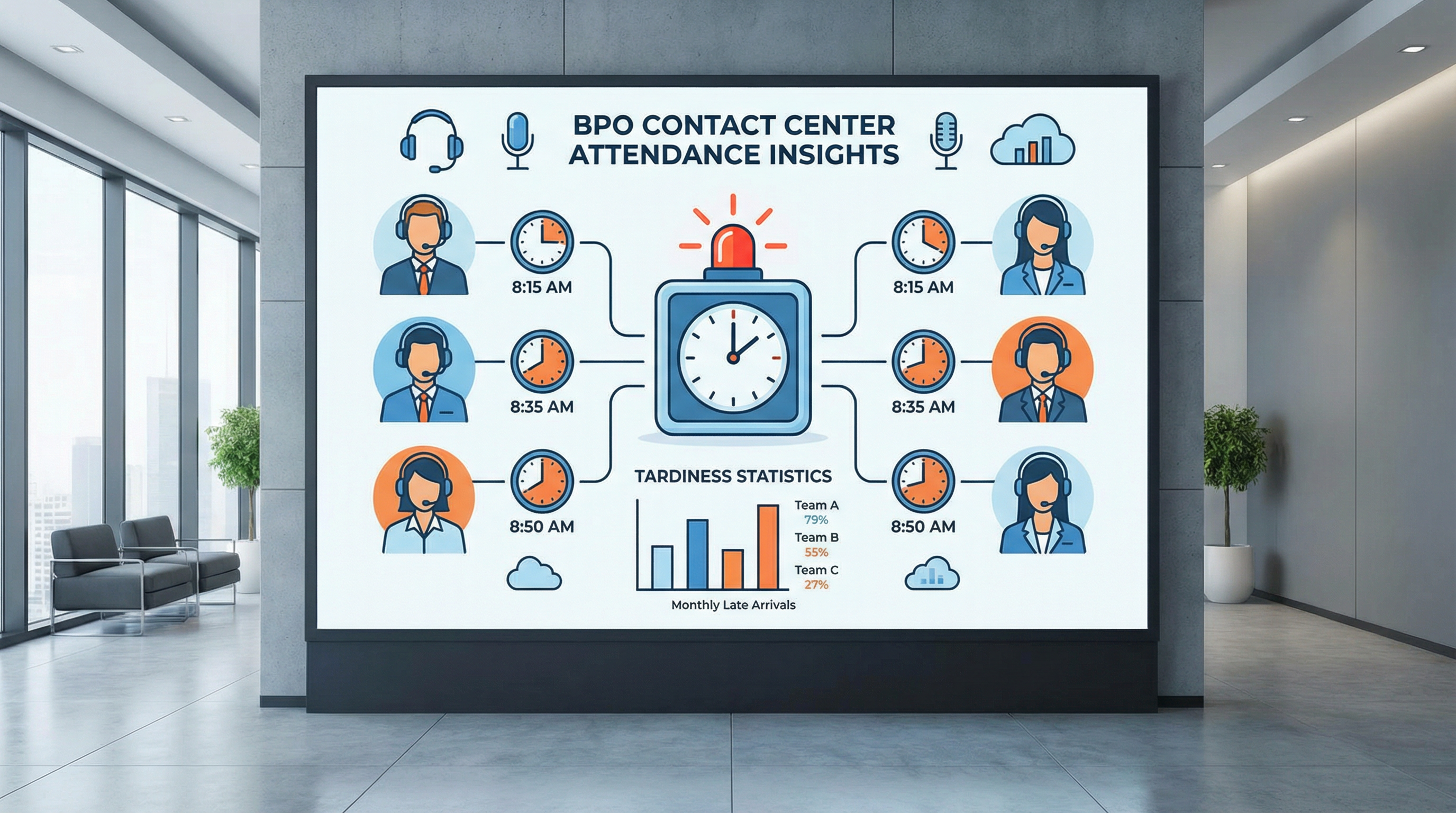
Late arrivals are one of the most persistent challenges facing BPO contact centers. When agents clock in late, it creates a cascade of problems: understaffed queues, longer customer wait times, frustrated team members who arrived on time, and ultimately, damaged client relationships. HeroFocus provides the data and tools BPO managers need to tackle this issue head-on.
The Hidden Cost of Tardiness in BPO Operations
In a contact center environment, every minute matters. Consider a typical scenario: a team of 50 agents is scheduled to start at 8:00 AM to handle the morning rush. If just 10% of agents arrive 15 minutes late, that's 75 agent-minutes lost during the busiest period of the day. Over a month, this translates to approximately 25 hours of lost productivity — equivalent to losing more than three full shifts.
But the impact goes beyond simple math. Late arrivals affect:
- Service Level Agreements (SLAs): Many BPO contracts include penalties for failing to meet response time targets
- Team Morale: Punctual employees become resentful when they consistently cover for late colleagues
- Client Trust: Clients notice when their customers experience longer wait times
- Scheduling Accuracy: Managers can't plan effectively when actual start times are unpredictable
How HeroFocus Detects Tardiness Patterns
HeroFocus goes beyond simple clock-in tracking to provide actionable intelligence about attendance patterns:
Real-Time Alerts Managers receive instant notifications when agents clock in late, allowing for immediate queue adjustments. The system distinguishes between minor delays (1-5 minutes) and significant tardiness (15+ minutes) to prioritize attention.
Pattern Recognition The system automatically identifies recurring patterns:
- Agents who are consistently late on specific days (Monday syndrome)
- Time-of-day patterns (early morning shifts vs. afternoon shifts)
- Seasonal variations (holiday periods, weather-related issues)
- Location-specific trends (certain sites with higher tardiness rates)
Root Cause Analysis By correlating tardiness data with other factors, HeroFocus helps identify underlying causes:
- Commute issues (agents living far from the office)
- Shift timing problems (schedules that don't align with public transit)
- Personal circumstances (childcare, school schedules)
- Engagement issues (agents who are disengaged may be chronically late)
Strategies for Reducing Late Arrivals
Once you have visibility into tardiness patterns, you can implement targeted interventions:
1. Flexible Start Windows For some roles, offering a 15-minute start window (e.g., 8:00-8:15 AM) can dramatically reduce tardiness without impacting coverage. HeroFocus helps you model the impact of different scheduling approaches.
2. Incentive Programs Recognize and reward consistent on-time attendance. HeroFocus can automatically generate reports for attendance-based bonus programs.
3. Targeted Coaching Rather than blanket policies, focus coaching efforts on agents with the most significant tardiness issues. Data-driven conversations are more effective than subjective feedback.
4. Schedule Optimization If certain shifts consistently have higher tardiness rates, consider adjusting start times or offering shift swaps to better match agent preferences.
Measuring Improvement
HeroFocus provides dashboards that track tardiness trends over time, allowing you to measure the effectiveness of your interventions. Key metrics include:
- Average tardiness (minutes late per occurrence)
- Tardiness frequency (percentage of shifts with late arrivals)
- On-time rate by team, location, and shift
- Trend analysis (improving, stable, or declining)
Conclusion
Late arrivals don't have to be an accepted cost of doing business in BPO. With the right data and tools, managers can understand the scope of the problem, identify root causes, and implement effective solutions. HeroFocus transforms attendance data into actionable intelligence that helps BPO companies deliver better service while building a culture of accountability.